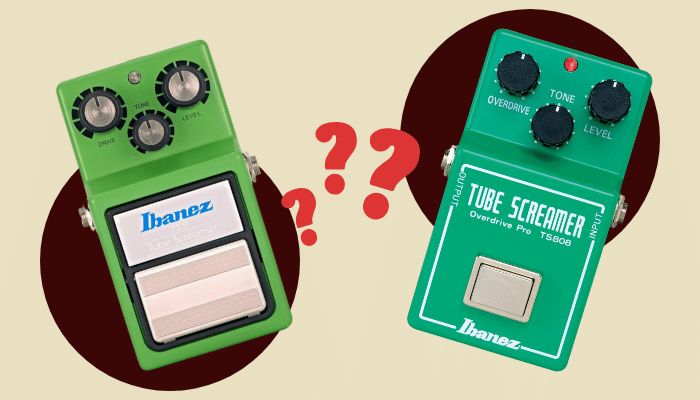
Two green boxes sit on the counter at your local shop. Same shape, same three knobs, near enough the same paint. One says TS9, one says TS808, and the price tags are about $70 apart. You are about to lose an afternoon arguing with yourself over which one goes home with you.
That is the Ibanez TS9 vs TS808 question, and it has been dragging on since 1979, when the first Tube Screamer showed up and quietly rewrote what an overdrive pedal was supposed to do.
Here is the short version. They are almost the same pedal. Two resistors apart, to be exact. But those two resistors, plus which chip is inside, are the whole reason the 808 gets called warm and the TS9 gets called bright.
I have played both for years. Let me save you the afternoon.
The Quick Answer
Sometimes you just want someone to cut through the noise and tell you which pedal to buy. Fair enough. I ran both through a Fender Ultra Strat into a Victory Duchess V40 for this, and here is my straight-to-the-point take:
Buy the TS808 if you want warm, vintage overdrive that sweetens your tone without taking it over. It is made for blues and classic rock, and it plays especially nice with bright amps or single coils. You just pay a bit more for that smoothness.
Buy the TS9 if you need your guitar to stand out. It is brighter, a little more aggressive, and it cuts through a dense mix. It is also easier on the wallet. I reach for the TS9 with darker amps or when a solo needs to jump out front.
Both give you that classic Tube Screamer sound. The differences are subtle. They are also real.
Price and Availability
Let me talk about what these cost and how easy they are to find, because the Ibanez TS9 vs TS808 gap is as much about your wallet as your ears.
The TS9 is cheaper and easier to find than the TS808. Ibanez keeps both in constant production, but it has built far more TS9s over the years. You can walk into almost any guitar store and find one on the wall, or order it online in about thirty seconds. The TS808 turns up less often in person, though most big retailers stock it.
Here is where the two land new and used, verified July 2026:
| New | Used | |
|---|---|---|
| Ibanez TS9 | ~$100 | $75-90 |
| Ibanez TS808 | ~$170 | $140-160 |
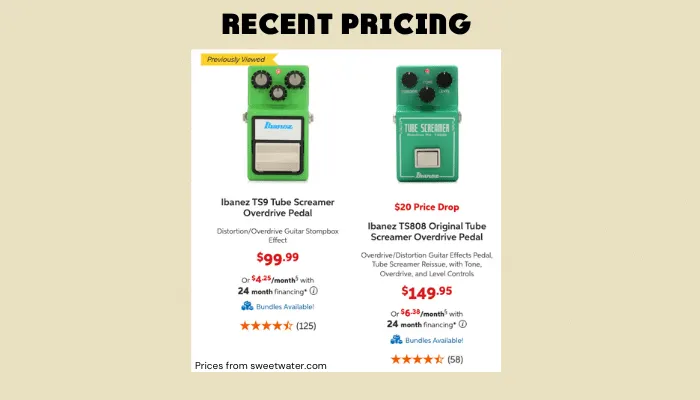
At Sweetwater as I write this, the TS9 is $99.99 and the standard TS808 reissue is $169.99. The hand-wired TS808HW sits closer to $300, but that is a different conversation.
The TS808 costs more for its “original version” status and slightly smaller production runs. It is not a rare pedal. It is just less common than the TS9.
But what about vintage models?
Original TS808s from the late ’70s and early ’80s can sell for well over $1,000, and vintage TS9s from the early ’80s often go for $300-500.
But Ibanez still makes both to specs very close to the originals. Personally, I would not hunt down a vintage Tube Screamer unless you are a collector. The modern versions are built to the same standard, and the price gap is mostly about the 808’s premium status, not better parts.
As always, try before you buy. The TS808 can be harder to track down for an in-person demo, but most major stores keep both around.
What’s the Difference in Sound?
Here is what I love about the Ibanez TS9 vs TS808 comparison.
They are both FANTASTIC.
Neither one is a transparent overdrive that leaves your tone untouched. Both stamp that classic Tube Screamer mid-hump on your sound. The question is how much edge comes with it, and that is where the differences show up the moment you spend real time with each one.
After too many late-night A/B sessions (yes, I am that guy), here is how each pedal shapes your tone.
TS808 Tone
Start with the TS808. This thing is smooth like butter. It feels like throwing a warm blanket over your amp. The midrange has this organic, rounded quality that just sits right. It is a brilliant “always-on” pedal, the kind that makes you sound better without anyone quite knowing why.
My playing notes on the TS808:
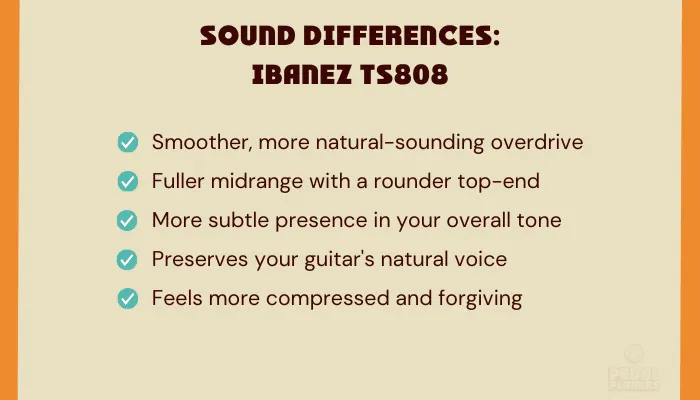
- Smoother, more natural-sounding overdrive
- Fuller midrange with a rounder top-end
- More subtle presence in your overall tone
- Excellent at preserving your guitar’s natural voice
- Warm and forgiving, rolling off the hard edges
TS9 Tone
The TS9, though? Different beast. It has an exciting edge that sings. The first time I used one, I couldn’t help but grin. Finally I wasn’t fighting to get a solo to cut through the mix.
My notes on the TS9:
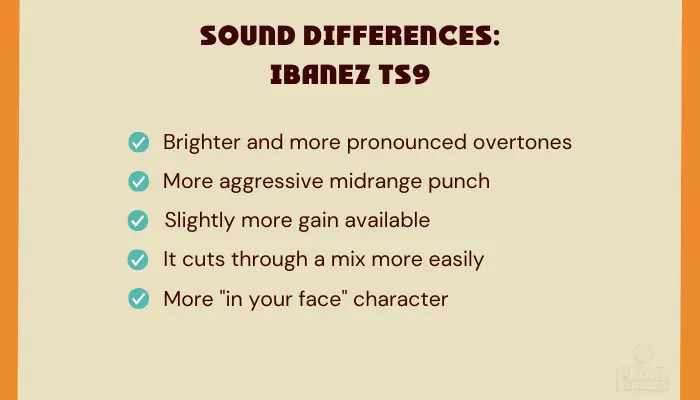
- Brighter, more pronounced overtones
- More aggressive midrange punch
- Slightly more gain on tap
- Cuts through a mix more easily
- A touch more compressed, with more “in your face” character
Why They Actually Sound Different (The Circuit)
So why does swapping two resistors matter? Here is the part every forum argument skips, and it is the real heart of the TS9 vs TS808 debate.
The TS9 and the TS808 are roughly 95% the same circuit. Same layout, same tone stack, same basic guts. The only things that differ are the op-amp and two resistors in the output section. That is it.
Those two resistors set how hard the pedal grips your signal on the way out:
- TS808: a 100 ohm series resistor and a 10k resistor to ground. That lower value loads the signal down, sands off the very top edge, and gives you the warmer, rounder voice.
- TS9: a 470 ohm series resistor and a 100k resistor to ground. Less loading, so more top-end survives. That is the brighter, crisper, more aggressive TS9 sound.
Both modern reissues run the JRC4558 (the JRC4558D dual op-amp), and both draw about 8mA at 9V, which is the one hard electrical spec Ibanez actually prints. You will see people quote input and output impedance numbers too, but those come from community spec sheets rather than Ibanez, so treat them as commonly cited rather than gospel. The resistor swap and the chip are the parts that are actually nailed down.
Now the honest bit. Having played both back to back for years, the difference is incredibly subtle. The two circuits are about 95% identical, and those two output resistors give the 808 a slightly warmer, smoother tone while the TS9 comes across a touch brighter and a little more compressed. It is real. It is also small enough that your amp, your guitar, and your settings will move your tone further than picking one green box over the other.
Famous Tube Screamer Players
One of the best ways to understand two pedals is to look at who leaned on them, then go back and actually listen.
Famous Players of the Ibanez TS808

The TS808 has been the backbone of blues and rock tone for decades. Take Stevie Ray Vaughan and that legendary Texas blues sound. He ran his 808 with the drive low and the level high, shoving his amps into that sweet spot where clean meets mean.
John Mayer picked up where SRV left off, using the 808’s natural voice for those smooth, vocal lead tones we all know.
Then there is Gary Moore, who wrung every last drop of sustain out of his TS808 and made some of the most gut-wrenching blues tones I have ever heard.
Worth knowing where the thing came from: the 808 was designed by Susumu Tamura at Nisshin Onpa (Maxon) back in 1979. Ibanez was the export brand, and Maxon still sells the same circuit today as the OD808.
And here is the part that still gets me.
Joe Bonamassa’s pedalboard still runs a TS808 in 2026. He has said he just buys them stock off the shelf. It goes to show that with every boutique option on earth available to him, there is still something about that original green box that keeps pulling players back.
Famous Players of the Ibanez TS9

The TS9 side is just as stacked.
The Edge from U2 built whole records around his TS9’s bright, chiming character. Put on any U2 album from the ’80s and you will hear it.
Then there is Trey Anastasio of Phish, who took it further. One TS9 was not enough, so he runs two in series for those soaring, sustained leads.
And if you need more proof the TS9 can rock, look at Green Day’s Billie Joe Armstrong, who uses the TS9 and its aggressive punch to drive that high-energy rhythm work.
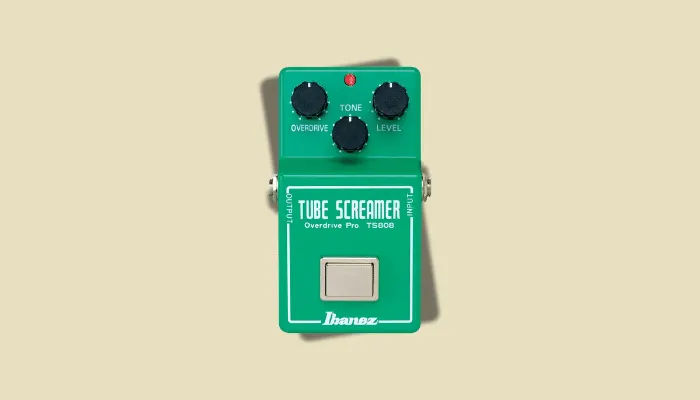
When to Use the TS808
The TS808 shines when you can lean on its smooth, warm character. Here is when it is likely your best choice.
Perfect For These Styles
- Blues and classic rock where organic, tube-like warmth is essential.
- Jazz fusion, where you need a subtle breakup that responds to your touch.
- Any genre where you want your overdrive to sound “vintage” and natural.
- When you need an “always-on” pedal that enhances rather than dominates your tone.
Ideal Gear Pairings
- Bright amplifiers (like Marshalls) that could use some smoothing out.
- Single-coil pickups, especially when you want to tame their brightness.
- Pedalboards where you’re stacking multiple drives (the 808 plays well with others).
- High-headroom amps that need some help breaking up.
Playing Situations
- Studio recording where you want the most natural-sounding overdrive.
- Small venues where you can hear all the subtle nuances in your tone.
- When you’re the only guitarist and need a fuller sound.
- Practice sessions where you want an inspiring, touch-sensitive response.
You’ll Love the TS808 If…
- You’re a blues player who lives for smooth, singing sustain.
- You like to control your overdrive with your guitar’s volume knob.
- You’re chasing that elusive “vintage” vibe.
- You want your overdrive heard but not necessarily noticed.
The TS808 is about enhancing what is already there rather than dramatically changing your sound. It is the pick for players who want their tone to sound better but still fundamentally like “them.”
When to Use the TS9
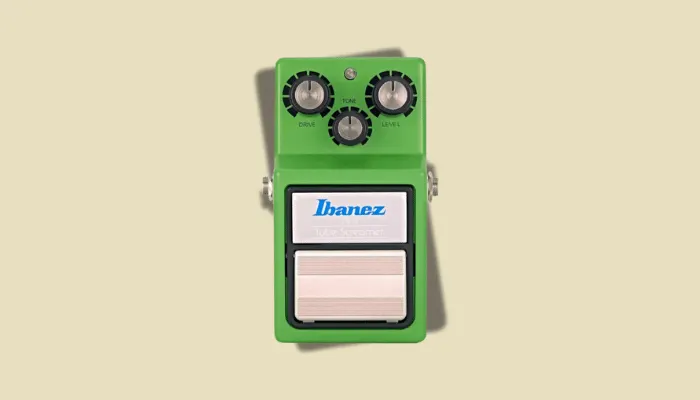
The TS9 is your go-to when you need your guitar to make a statement. Here is where it really shines.
Perfect For These Styles
- Rock and alternative where you need to cut through the mix.
- Modern country music where articulation is key.
- Metal as a boost for high-gain amps.
- Any style where you switch between rhythm and lead frequently.
Ideal Gear Pairings
- Darker-voiced amplifiers (like some Fenders or Blackstars).
- Humbucking pickups, especially when you want to add clarity.
- Modern high-gain amps where you need a tighter, more focused sound.
- Effects chains where you want your drive to stand out distinctly.
Playing Situations
- Shows where you need to cut through the band mix.
- Live performances with multiple guitarists.
- When you need a reliable solo boost.
- High-volume situations where clarity is crucial.
You’ll Love the TS9 If…
- You want your solos to jump out of the mix.
- You’re after a more modern, aggressive sound.
- You need a pedal that can do both subtle drive and pronounced grit.
- You like your overdrive to have a bit more bite and presence.
The TS9 is the choice when you need to be heard. It is for players who want their overdrive to make a clear statement and cut through, whether that’s in a dense mix or on stage with a full band.
Ibanez TS9 and TS808 Settings
Enough theory. Here is where I actually set mine.
My TS808 (Always-On Warmth)
This is my set-and-forget for the 808. Level around 1 o’clock, Drive around 10 o’clock, Tone at noon. Just enough grit to thicken things up without anyone clocking that a pedal is even on. The 808 only has three knobs, Overdrive, Tone and Level, so there is not much to overthink here.
My TS9 as a Low-Drive Lead Voice
When I want a touch of drive for leads and nothing more:
- Tone at 11 o’clock
- Gain at 11 o’clock
- Volume between 12 and 2 o’clock, depending on how loud the amp is
That is my go-to for leads that just need a little push. I have some new pedals on the way, so this might shift, but that is where it lives right now.
My TS9 as a Lead Boost
When I want the TS9 to slam the front of the amp for a solo:
- Volume dimed
- Gain from off to about 9 o’clock
- Tone around 10 to 10:30
Barely any drive out of the pedal itself here. It is all volume, hitting the amp harder and letting the amp do the shouting.
If you want a couple of general starting points that work on either pedal, these two are worth a try.
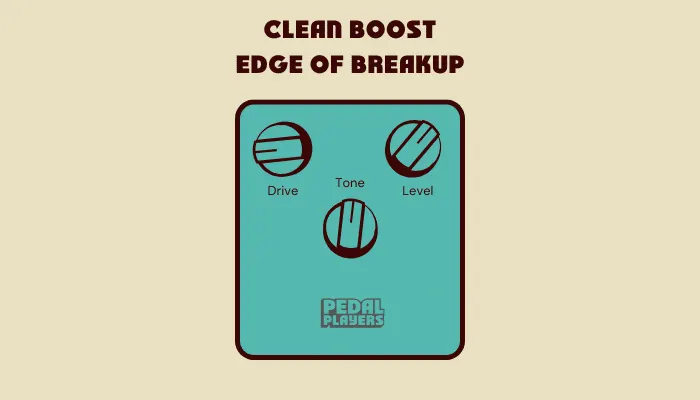
Clean Boost / Edge of Breakup
This works best with smaller amps that already have a little natural overdrive. Set the drive low, push the level up high, and use it to shove the amp into more natural distortion.
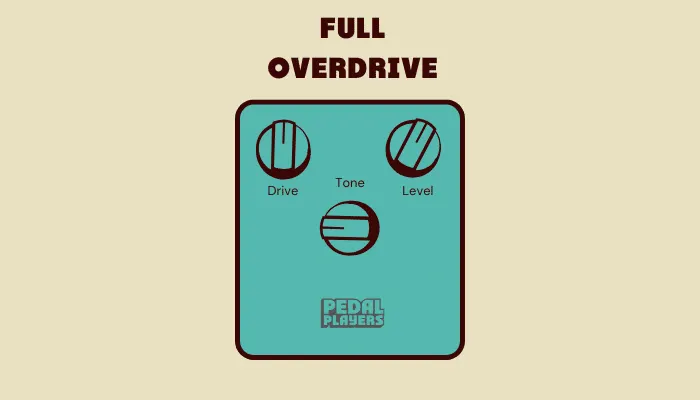
Fuller Overdrive Sound
Through a larger, cleaner amp you can pull a full overdrive sound out of a Tube Screamer. To do it, set the drive to about halfway, tone around 9 o’clock, and level at about 2 o’clock.
Stacking Tube Screamers
Let me talk about one of my favorite parts of the Tube Screamer family.
Their stackability.
While one Tube Screamer can certainly get the job done, some players have found that the magic happens when you start running more than one.
Trey Anastasio, again. He is famous for running two TS9s in series, building this beautifully layered gain structure that somehow stays crystal clear even when he pushes it to the edge. Each pedal brings out the best in the other.
There are plenty more examples. Here is a great video from Wampler Pedals about stacking Tube Screamers. They don’t cover the TS9 and TS808 exactly, but the results would be very similar.
TS9 vs TS808 for Metal Guitar
Either of these will work for metal. Spend any time around modern metal players and you will notice a Tube Screamer, TS9 or TS808, parked in front of the high-gain amp to tighten everything up. It clamps the flabby low end and focuses the distortion into something brutal and articulate.
It caught on so hard that it basically became part of the modern metal sound.
You are not using it for its own drive here. You are using it as a clamp. Roll the pedal’s gain back, push the level, and let it slam an already-cranked amp. Tight, focused, mean.
The Final Verdict
Here is where I have to be honest with you.
I do not have a Tube Screamer on my board right now. I am deep in a Klon phase, and for the sound I am chasing at the moment, the Klon wins. The TS just is not the flavor I am after these days.
But when I do reach for a Tube Screamer, my hand goes straight to the TS808. No thought involved. It is the one I got years back by swapping an old Small Clone with another player, a straight trade across the counter, and it is still the one I trust.
So if you are asking which Tube Screamer is the best, my answer is the honest one. It depends on you, and the gap between them is smaller than the internet wants you to believe. Line up the TS9 vs TS808 and both have earned their legend. The differences are real, but subtle enough that your playing, your amp, and your settings will shape your tone more than the choice between these two.
The best way to decide?
Play both through your own amp with your own guitar. If you can’t, look at your gear and what you actually want from it. Darker amp, or solos that need to cut? TS9. Bright amp, or warm always-on grit? TS808.
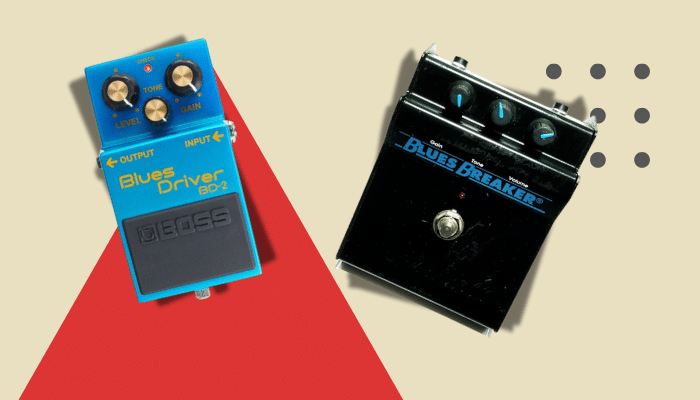
And if you want to keep chasing overdrives after this, our Bluesbreaker vs Blues Driver shootout is the next rabbit hole down.
Either way, buy the one you will actually keep switched on.