You dialled in the perfect octave-down at home. Then you stomped it on after the fuzz at practice and the whole thing fell apart. Glitching, wobbling, chasing notes it couldn’t quite catch.
So where does an octave pedal go in the chain? Early. Right after your tuner and compressor, before any drive or distortion, where it gets the cleanest signal to track.
That’s the short version, and for most players it’s the whole answer. But octave pedal placement is one of the few spots on a board where the “rules” genuinely argue with each other, and where your own ears might overrule both. So let’s get you the copy-able order first, then the reasons, then the one call worth making yourself.
Where Does an Octave Pedal Go in the Chain?
The simple answer: early.
The most reliable spot for an octave pedal is near the front of your signal chain. Right after your tuner, right after any compressor, and before your drive, distortion and modulation. Give an octave pedal a clean signal and it tracks your playing accurately. Feed it a distorted, harmonically messy one and it starts guessing.
One exception worth trying: if you run a fuzz, drop the octave pedal right after it. An octave stacked on top of fuzz is a filthy, synth-like racket, and it’s one of the best reasons to own both. (If you’re wrestling with where the fuzz itself belongs, that’s its own before-or-after question.)
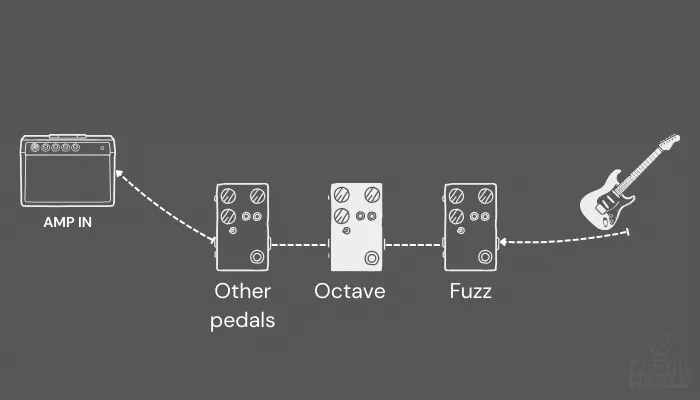
The Full Signal Chain, In Order
Here’s the order most players and most pedal companies land on, front to back:
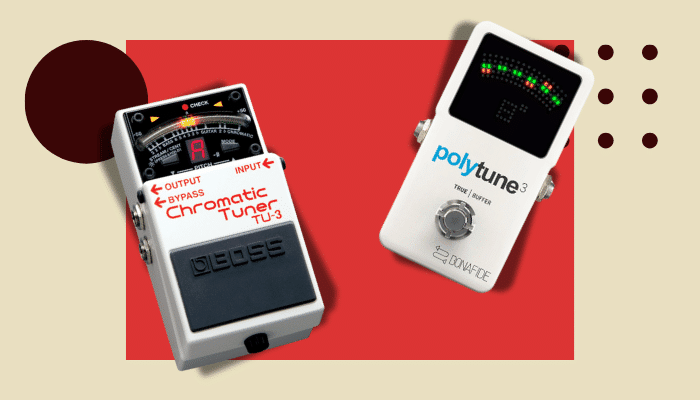
- Tuner
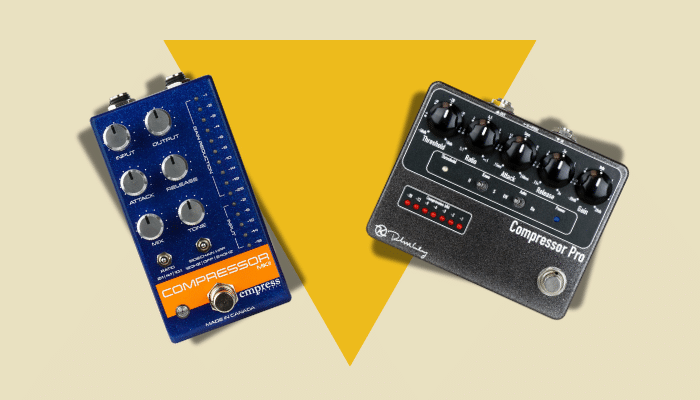
- Compressor
- Octave / pitch
- Fuzz
- Wah
- Drive / distortion
- EQ
- Modulation (chorus, phaser, flanger)
- Delay
- Reverb
Your octave pedal sits third, right behind the tuner and the compressor.
Here’s where it gets less tidy. That order puts your compressor before the octave pedal, which is what BOSS, Origin Effects and most of the internet recommend. A compressor hands the octave a steadier signal and it tracks better for it. JHS Pedals flips it, putting the octave before compression to keep your natural dynamics intact.
Both work. Default to compressor first if you want the safe, tracks-well answer. Then read the next two sections, because whether that’s actually right for you depends entirely on the kind of octave pedal you’re running.
Why Tracking Dictates Placement
Every “put it early” rule comes down to one word: tracking. That’s the octave pedal’s ability to hear the note you’re playing and generate the octave cleanly. Get tracking right and the placement question mostly answers itself. (For the nuts and bolts, here’s how octave pedals work.)
Octave pedals split into two camps, and the camp yours falls into decides how fussy it is about placement.
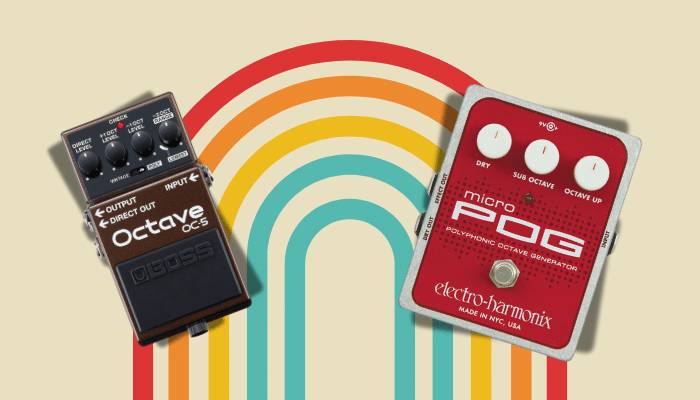
Monophonic and analog octave pedals read one note at a time, and they want a clean signal to do it. Feed them a chord or a distorted mess and they glitch. These live early, full stop. Think the analog MXR M288 Bass Octave Deluxe, which can even stumble on the low G, the BOSS OC-5 in its Vintage mode, the DigiTech Whammy on its Classic algorithm, or the TC Electronic Sub’N’Up in Classic mode.
Polyphonic octave pedals read whole chords without falling apart, so they tolerate life further down the chain. The EHX Micro POG and Nano POG, the bigger POG2, the OC-5 and Sub’N’Up in their poly modes: all happy taking a busier signal. EHX even added the Pico POG recently, a smaller-than-Nano polyphonic unit that’s now the easiest way into the POG family. Skip the original full-size POG. It’s been gone since 2009.
My own take: an analog octave pedal can seem to struggle to track at times, but honestly it’s rare. I run one early anyway for the sound I’m after, and clean tracking is a bonus on top. I’m not a high-gain player. Push into really saturated territory and I’d bet it gets harder to hold a note.
Octave Before or After Compressor?
This is the one everyone actually searches for, so let’s settle it.
The quick answer: compressor first. Running your compressor ahead of the octave pedal gives it a steadier, more even signal to track, and it lends the octave some sustain, which octaves can badly lack. If you want confidence and you want it now, put the compressor in front of the octave pedal and move on.
Now the honest part. Compression into an octave isn’t for me, at least not with an analog one.
An analog octave divider plays more like an old guitar synth than a “pedal,” and part of the deal is learning how it tracks. Dial it in properly, put the practice in, and you adjust to it. Your playing comes out far cleaner because you’re meeting the pedal halfway. A compressor adds sustain, sure. It won’t turn messy playing into something that tracks. And for an analog octave-up, a drive placed after the octave pedal gives you all the sustain you’d ever need. A comp in front just gives you noise.
So who’s right? Both, depending on what you’re after and how much patience you’ve got. This is one of the least settled combos in the whole pedal world, and it costs you nothing to audition both. Try compressor first, then flip it, and keep whichever one your ears vote for. No patience, or you just want it working today? Compressor first. Done.
Difference Between Analog and Digital Octave Pedals
A lot of this comes back to whether your octave pedal is analog or digital, and it maps almost exactly onto the tracking split above.
Analog octave pedals are the mono, early-slot crowd. They want a clean signal before anything distorts or modulates it, and they reward you with that thick, slightly unhinged synth character. Digital octave pedals are the flexible ones. They’re usually polyphonic, they handle full chords, and they’ll sit happily further down the chain and play nicer with everything around them.
If you know which type you’ve got, you already know roughly where your octave pedal wants to live.
How I Keep Track of What Works
One habit worth stealing: write it down.
This started for me as a paper notebook years ago, a scrappy log of settings I didn’t want to lose. These days it all lives in Apple Notes, and some of those entries end up becoming articles right here on PedalPlayers. I jot down settings I like, pedal combos that actually work together, and things I’ve seen other players do that I want to steal later.
Octave placement is exactly the kind of thing that log is for. You’ll find a spot that sings on one board and forget it by the next. Write down where the octave pedal landed and why. Future you will be grateful.
What Actually Works
So, where does an octave pedal go in the chain? Start it early: tuner, compressor, octave, then your drive. That order will serve you well most of the time, and it’s a fine place to plant your pedalboard and build out from.
The one thing worth actually testing: compressor before the octave pedal versus after it. That’s the call the rules can’t make for you. If you’re running an analog octave, take the steer here, skip the compressor and let a drive after the octave carry the sustain instead.
Then move it. Try it before the fuzz, after the distortion, somewhere nobody told you to put it. The board is never really finished, and that’s the fun of it. Find the spot that sounds like you, write it down, and go play.